Seasonal Dining at Salotto Della Sorgente: What to Order in Spring, Summer, Fall, and Winter
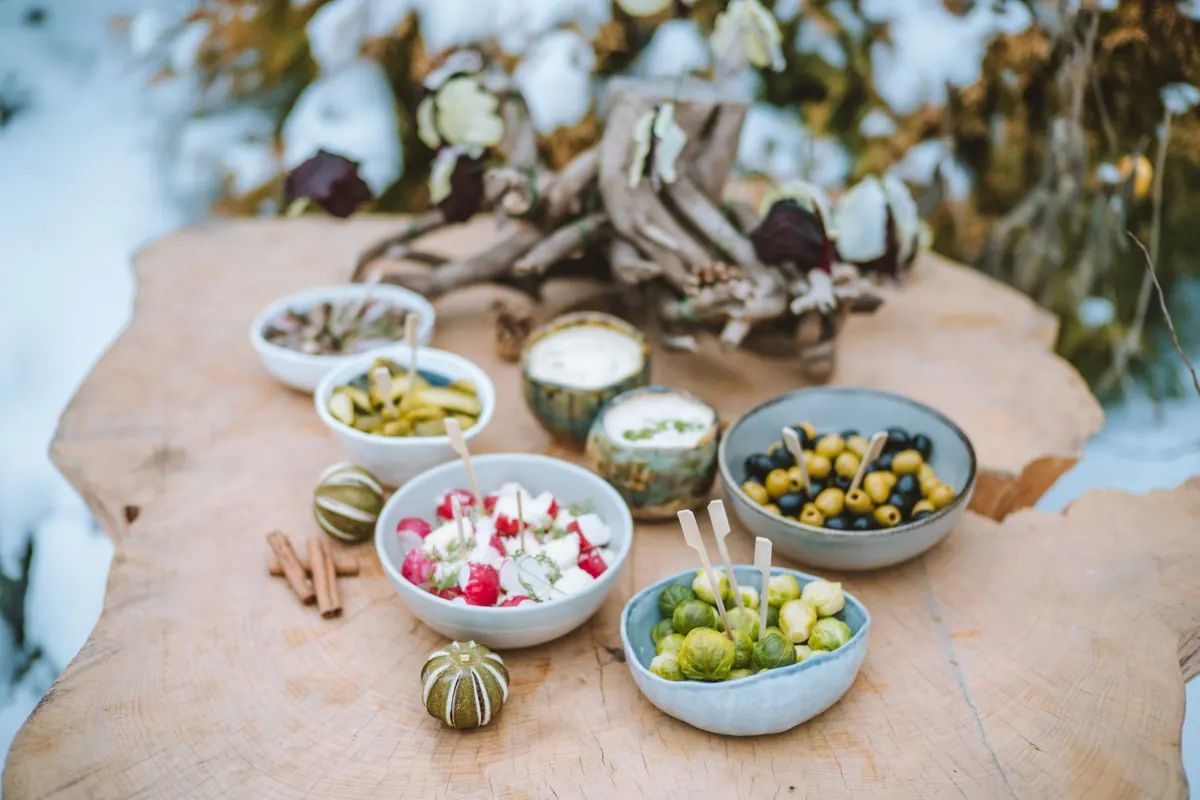
A menu that changes with the year makes a quiet promise: what reaches your table has not been waiting in a freezer since October. At Salotto Della Sorgente that promise shapes everything — the weight of the first course, the temperature of the last, the way the kitchen decides whether to roast or to chill. Spring brings green, grassy things and fast cooking. Summer pushes everything toward cold plates, the grill, and fruit. Fall smells of rain and woodsmoke. Winter is long, slow, and generous with the pot.
Knowing what to look for, and what to ask, is the difference between a pleasant dinner and the one you describe to friends a month later. Here is how the year moves through the kitchen, and how to order alongside it.
How the Menu Follows the Market
The list stays deliberately short. A handful of dishes that change often beats a long catalogue that never does, and the kitchen would rather run out of something at nine o'clock than serve it on Thursday. Some things remain all year: the bread, a small selection of cured meats and aged cheese, a couple of pasta shapes, the cellar. Everything else is on loan from the season.
Three things shift most. Weight — butter and braising in the cold months, oil and acid in the warm ones. Temperature — cold soups and raw fish in July, baked pastas and hot broths in January. And the supporting cast — the vegetable, the herb, the fruit that quietly decides what the plate looks like before anyone writes the specials.
The single most useful thing you can do at the table is ask what arrived this week. Staff who work a seasonal kitchen know exactly which crate came in yesterday and which dish was built around it that morning. That answer is almost always the best meal in the room.
Spring: Green Shoots and Quick Cooking
Spring is the shortest season on a menu and the most impatient. Asparagus, peas, favas, artichokes, and bitter greens arrive in a rush and lose their nerve within days. The kitchen responds by cooking less: blanching, dressing, folding herbs through at the last second, letting a vegetable be a vegetable.
Look for light primi — a risotto kept loose and grassy, pasta with butter and spring herbs rather than a long-simmered sauce, egg dishes that appear for a few weeks and vanish. Secondi lean toward lamb, young poultry, and delicate fish. Desserts turn tart before they turn sweet: rhubarb, early strawberries, citrus hanging on from the winter pantry.
How to order it: go vegetable-first. Two vegetable courses and one protein will show you more of the season than a single large plate. Spring whites — something crisp and herbal — suit nearly everything on the list, and they will not overwhelm the greens.
Summer: Long Light, Cold Plates, and the Grill
Heat changes the kitchen's working hours as much as its menu. Prep moves earlier, the grill takes over, and the cooking that remains is fast and dry. Tomatoes at their peak need salt and nothing else; the same is true of good fish, good melon, good olive oil.
Expect crudo and marinated raw fish, cold vegetable soups, platters of grilled vegetables dressed while still warm, and lighter cured meats. Pastas get simpler — tomato, garlic, basil, oil — and desserts retreat to fruit, ice, and cream. This is also the season when the aperitivo hour does the heaviest lifting: a bitter drink, a few small plates, and no rush to sit down.
Ordering well when it's hot
- Start cold and stay cold for two courses; the grilled main will taste better for the contrast.
- Ask what is being served at room temperature — those dishes are usually the ones the kitchen is proudest of.
- Order the fish over the braise. Nobody wants to be the person at the table eating stew in August.
- Book early for outside tables and ask for shade rather than sun; a late lunch beats a midday one.
Fall: Earth, Mushrooms, and the Return to Fire
The first cold week is when the menu turns. Mushrooms, squash, chestnuts, and root vegetables come in, and the kitchen starts reaching for the oven again. Risotto thickens, pasta picks up butter and sage, and the first braises appear — quietly at first, then everywhere by the end of October.
Fall rewards richness, but it also rewards restraint. A plate of roasted mushrooms with good oil and salt will tell you more about the season than a crowded sauce, and game, when it appears, should be ordered simply. This is the season to move your wine up a shade: less perfume, more earth, a little more structure.
Ask whether anything has been on the fire since morning. Braises started early and served late are one of the small privileges of eating in a kitchen that cooks rather than assembles.
Winter: Slow Cooking and Warmth
Winter is the most generous season for anyone who likes to eat slowly. Beans and legumes, cabbage, long-cooked greens, polenta, broths, and braises that have had hours to settle. The menu grows heavier and shorter; the kitchen leans on the pantry it built in summer. Late in the season, citrus arrives to cut through all that butter and fat, and the desserts get warmer — baked, spiced, served with cream.
Order in layers: something salty and small to start, a bowl of something that has been simmering, then one rich main to share rather than two to finish. And leave room for the cheese. Winter is when an aged cheese and a glass of something dark does the work a dessert would do in June.
A Practical Order of Play
- Ask before you open the menu. "What came in this week?" and "What's been cooking since this morning?" are the two best questions in any seasonal restaurant.
- Balance temperature, not just flavour. One cold dish and one hot dish at the table beats two of the same.
- Take one vegetable course on its own. Not as a side, not as a garnish — as a dish.
- Order across the list, not down it. A pasta, a vegetable, a fish or a braise. Sharing three small things usually eats better than three big ones.
- Mention dietary needs at the start. Seasonal kitchens build plates from the market, so they can adapt faster when they know early.
- Finish seasonally. Fruit and ice in the heat, something baked and warm in the cold.
How to Order Well in Any Season
Three habits carry you through the year. Ask what is fresh rather than what is popular. Follow the vegetable, because it is the part of the plate that changes most. And resist ordering the same weight of food in July as in January — your appetite is seasonal too, even if your favourite dish is not.
Beyond that, the timing matters as much as the food. Book the terrace for the warm months and a corner table near the kitchen for the cold ones. Come hungry in winter and curious in spring. Sit longer than you planned in summer, when the light is the best thing on the menu, and a little less long in fall, when there is usually somewhere warm to go afterwards.
The kitchen will do the rest. Its job is to keep the menu honest; yours is to pay attention to what the year is offering and order accordingly.
Photo: Anastasia Shuraeva / Pexels