Common Mistakes to Avoid When Booking Dinner at Salotto Della Sorgente
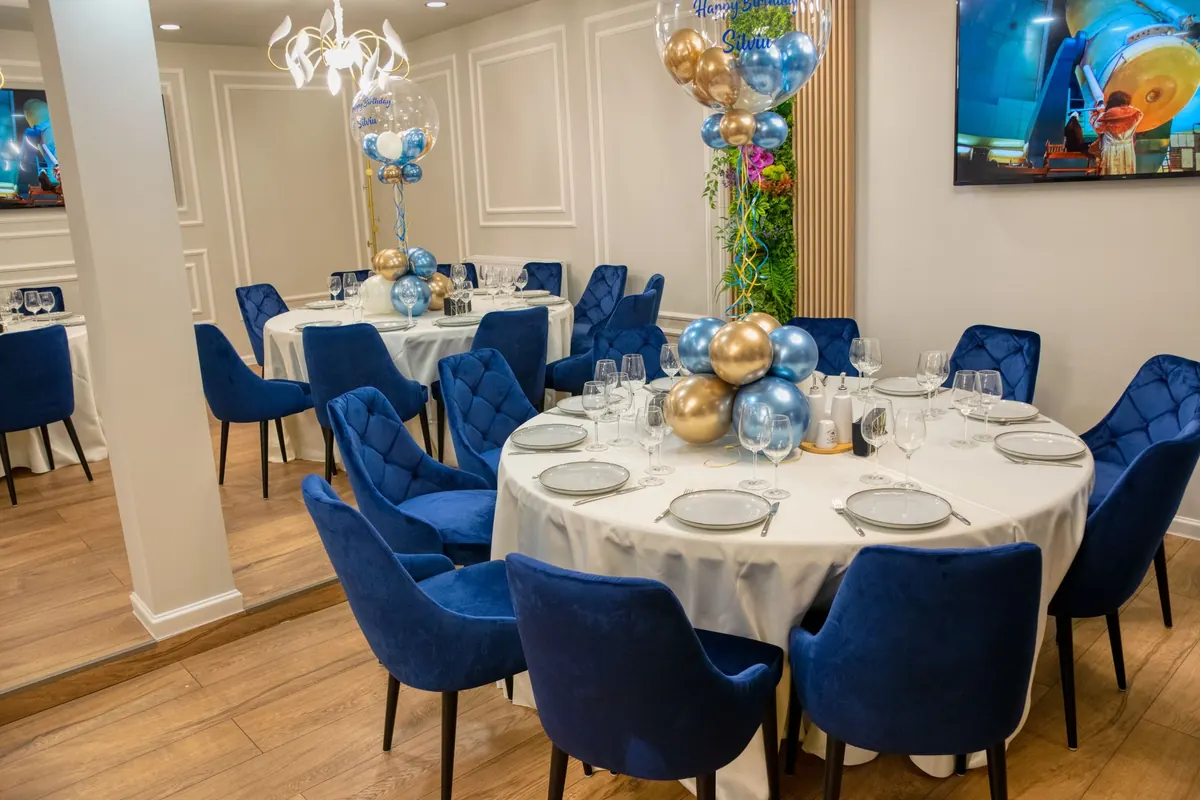
Most evenings at Salotto Della Sorgente unfold the way they should: guests arrive, glasses are filled, plates go out, conversation carries on a little longer than planned. When a night goes sideways, it almost never starts in the kitchen. It starts with a booking that left something unsaid. A party of six that turns into nine. A serious allergy mentioned for the first time after the bread basket lands. A table held for eight o'clock while four people trickle in across forty minutes.
None of these are disasters, and none require an apology. They simply ask a small amount of the kitchen and the front of house that could have been given earlier, with far better results. What follows are the booking mistakes we see most often, why each one costs you something, and exactly what to do instead.
Booking Only When the Week Has Already Started
A table for two on a Tuesday is rarely a problem. A table for seven on a Saturday at eight o'clock, near the window, is a different request entirely, and it needs room to be solved well. The mistake is not booking late in any absolute sense; it is booking late relative to what you are asking for.
Use this as a rough rule. If the plan is fixed, book it. If your date is tied to something immovable, such as a birthday or a train home, book it before you start comparing options. For groups of six or more, or for any evening close to a holiday, pick up the phone rather than sending a form: a two-minute conversation lets us check the room, the timing and the table shape at once, and you leave with a confirmed answer instead of a hope.
If your timing is genuinely flexible, say so. A note like "anywhere between seven and eight-thirty would work" gives us two or three ways to seat you rather than one.
Leaving Dietary Needs Out of the Booking
Preferences are easy. A guest who would rather not eat meat, or who dislikes anchovies, can be looked after at the table without much fuss. Conditions are different, and they change how a dish is prepared from the first step rather than the last. The booking form has a field for this for a reason; a line written there reaches the kitchen before service, while a sentence spoken at the table reaches it mid-evening.
Be specific, and be honest about the difference between a preference and a medical need:
- Preferences: "No mushrooms, please," or "one guest eats vegetarian." Easy to accommodate with notice, and usually still manageable without it.
- Intolerances and allergies: name the ingredient and the reaction, not just the label. "Coeliac" and "trying to eat less gluten" lead to two very different preparations.
- Severe allergies: tell us by phone after booking, not only through a form. Our kitchen handles many ingredients in a shared space, so we will be candid about what we can and cannot guarantee.
One sensible note: a restaurant is not a medical setting. If an allergy is severe, speak to us directly and take your own professional medical advice about what is safe for you. We would far rather have that conversation in advance than at the pass.
The Party That Keeps Changing Shape
"Probably eight, maybe ten, but two might not come." We understand how real evenings work, and nobody is expected to know in advance who will cancel. The problem is that a number determines almost everything behind it: how many tables are pushed together, how the kitchen paces its prep, how many staff are on the floor.
Book the higher number and adjust downward. A table reduced from ten to eight is easy to reshape; a table of six that becomes ten at the door is often impossible without moving other guests. If you are unsure, tell us the range rather than the optimistic figure. Then confirm the final count a day or two before, when your group has actually made up its mind.
Two details that are easy to forget and genuinely helpful: mention children, including whether you need a high chair, and mention whether the table will be one bill or several. Both change how we set the room.
Assuming the Table Is Yours for the Whole Evening
On quieter nights, tables often stay yours until closing. On busy ones, they are booked within a seating window, which is why your confirmation email gives an arrival time rather than a suggestion. Arriving twenty minutes late on a full evening is not a catastrophe, but it does compress the meal, and on the busiest nights it can shorten it.
If you are running behind, call. We can hold, adjust, or tell you honestly if the timing has become tight. And if your party is arriving separately, aim for the whole group within fifteen minutes of the booked time; a table cannot properly begin until most of it is seated.
Not Saying What the Evening Is For
A quiet dinner for two, a birthday with a cake, a business conversation that needs to stay audible, a proposal that depends on a particular corner: these are different evenings, and we can shape them if we know. Guests often mention the occasion on arrival, which is charming but late. Say it in the booking notes.
The same goes for practical needs. A wheelchair, a walking stick, a pram, a guest who needs to sit near the door. Mention it when you book and we will do our best to plan around it, rather than improvising while you stand in the entrance. If the occasion is a surprise, say so discreetly and we will keep it quiet, including what we do and do not say at the table.
Booking Twice, Then Going Quiet
It happens more than you would think. Someone enquires by form, a partner calls, a friend adds a fourth request, and three holds land on the same evening for the same group. Each one takes a table out of circulation and may turn away guests who would have filled it. Book once, through one channel, and let us know if anything changes.
Cancellations are the other half of this. Plans shift, and there is no shame in it. Tell us as soon as you know, not on the night if it can be helped. A table released on Wednesday can be rebooked. A table released at seven o'clock on Saturday stays empty.
Before You Confirm: A Short Checklist
Nothing here takes more than a few minutes, and together it removes most of the friction from an evening out.
- Book as soon as the date is fixed, and call for six or more.
- Give the highest likely headcount, then confirm the final number a day or two ahead.
- List dietary needs with the booking, naming the ingredient and the reaction, and phone us for anything severe.
- Mention children, high chairs, accessibility needs and whether you want one bill or several.
- Note the occasion, especially if it is a surprise.
- Keep to one booking channel, and cancel early if plans change.
Do those things and the rest of the evening takes care of itself. You arrive, we have the table ready and the kitchen already knows what it needs to know, and the conversation gets to run on a little longer than planned, which is rather the point.
Photo: Cristian Mihaila / Pexels